FOR IMMEDIATE RELEASE
Research from Anthropic and OpenAI shows AI models exploiting blockchain vulnerabilities in simulations, as a real-world attacker struck one of the same flaws independently.
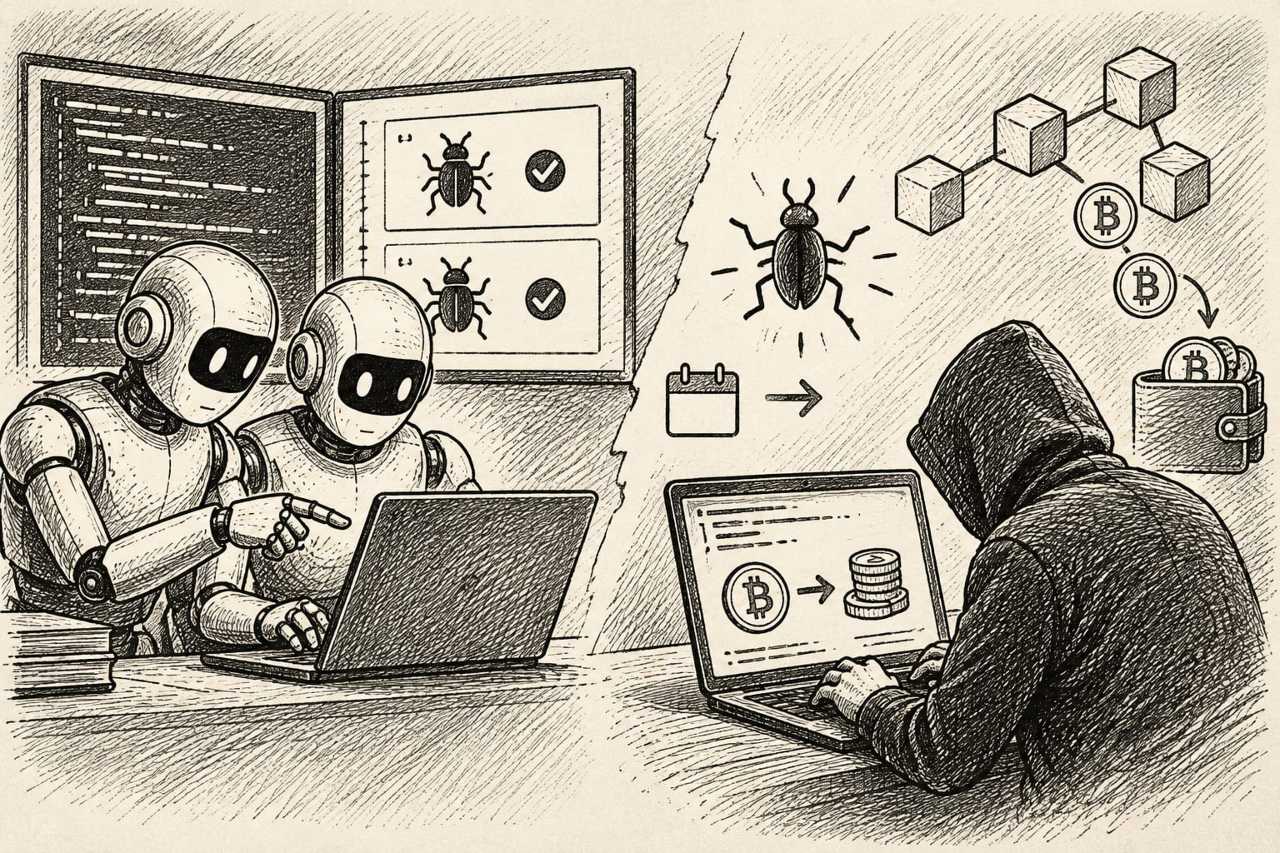
LONDON, May 22, 2026 — Anthropic published a report describing research in which artificial intelligence agents identified two previously undisclosed vulnerabilities in cryptocurrency software during blockchain simulations in 2025, one of which was exploited by a real attacker four days after the discovery, according to the researchers involved. The researchers said the attack was independent and that their account does not establish any link between the attacker and the study's findings.
According to the research team, the attacker took approximately $1,000, or £746, in trading fees from a flaw affecting a token-launching service. Researchers said the vulnerability stemmed from missing validation of fee recipients, which allowed unauthorised withdrawals. They reported that they had found no way to contact the service's developer before the attack occurred, separate from their own work.
A second vulnerability identified during the same research involved a calculation function capable of inflating token balances, the researchers said. In that case, they reported that an independent ethical hacker recovered the assets at risk and returned them to their owners. The researchers said the two outcomes illustrate the difference between discovering vulnerable code and protecting the assets connected to it, adding that their own testing had no impact on real funds.
The underlying project tested Anthropic's Claude Sonnet 4.5 and OpenAI's GPT-5 using blockchain simulations rather than live attacks, the researchers said.

In a report dated May 22, 2026, Anthropic described an updated evaluation called SCONE-bench, which includes 12 exploits reported after January 1, 2026, a date the company identified as the latest knowledge cutoff across the models it tested. Anthropic said its Mythos Preview model successfully exploited every vulnerability included in the set, reporting $35 million, or £26.17 million, in simulated proceeds. That figure exceeded the next-best performing model by $15 million, or £11.22 million, according to the company. Anthropic described these as laboratory results rather than funds taken from any customer.
Anthropic said the evaluation allowed eight trials per problem, meaning the results reflect repeated attempts rather than a single opportunity against a live service. The company said it calculated dollar values using historical token prices from the dates of the corresponding real-world exploits, and that the total measures performance against a selected set of vulnerable contracts rather than an estimate of exposure across all cryptocurrency holders.
Separate research conducted by OpenAI together with crypto investment firm Paradigm examined three tasks: detecting vulnerabilities, repairing them, and exploiting them, using an evaluation called EVMbench built from 117 curated vulnerabilities drawn from 40 audits, according to OpenAI. The company reported that its GPT-5.3-Codex model scored 71 percent in exploit mode, compared with 33.3 percent for GPT-5. OpenAI said the exploit tasks ran on an isolated local blockchain using historical, publicly documented vulnerabilities.
OpenAI reported that agents performed best when tasked with draining funds within the test environment, while detection and repair proved more difficult. The company said some agents stopped after identifying a single issue, and that repair tasks required removing vulnerabilities without breaking a contract's intended functionality. OpenAI cautioned that EVMbench does not represent the full difficulty of securing real-world services, noting that widely used contracts may have undergone greater scrutiny, and said its scores should not be treated as directly comparable with Anthropic's simulated dollar figures, which measure a different outcome.
According to the researchers, the four-day interval between the discovery and the real-world exploit represents a notable chronology but not evidence of a connection between the study and the attacker. They said the broader unresolved question raised by the findings is how defensive discoveries of this kind can be turned into effective protections before another party identifies the same weakness.
About
This release was issued by the communications office of the organization that publishes this site, which prepares formal releases on developments in artificial intelligence, cybersecurity and digital assets for its readers.
Source: www.techtimes.co.uk