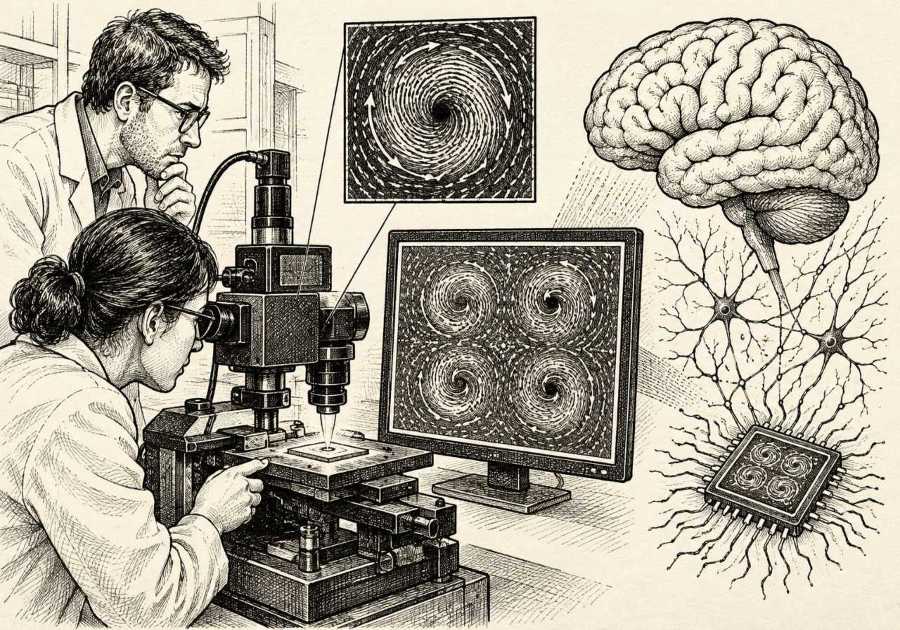
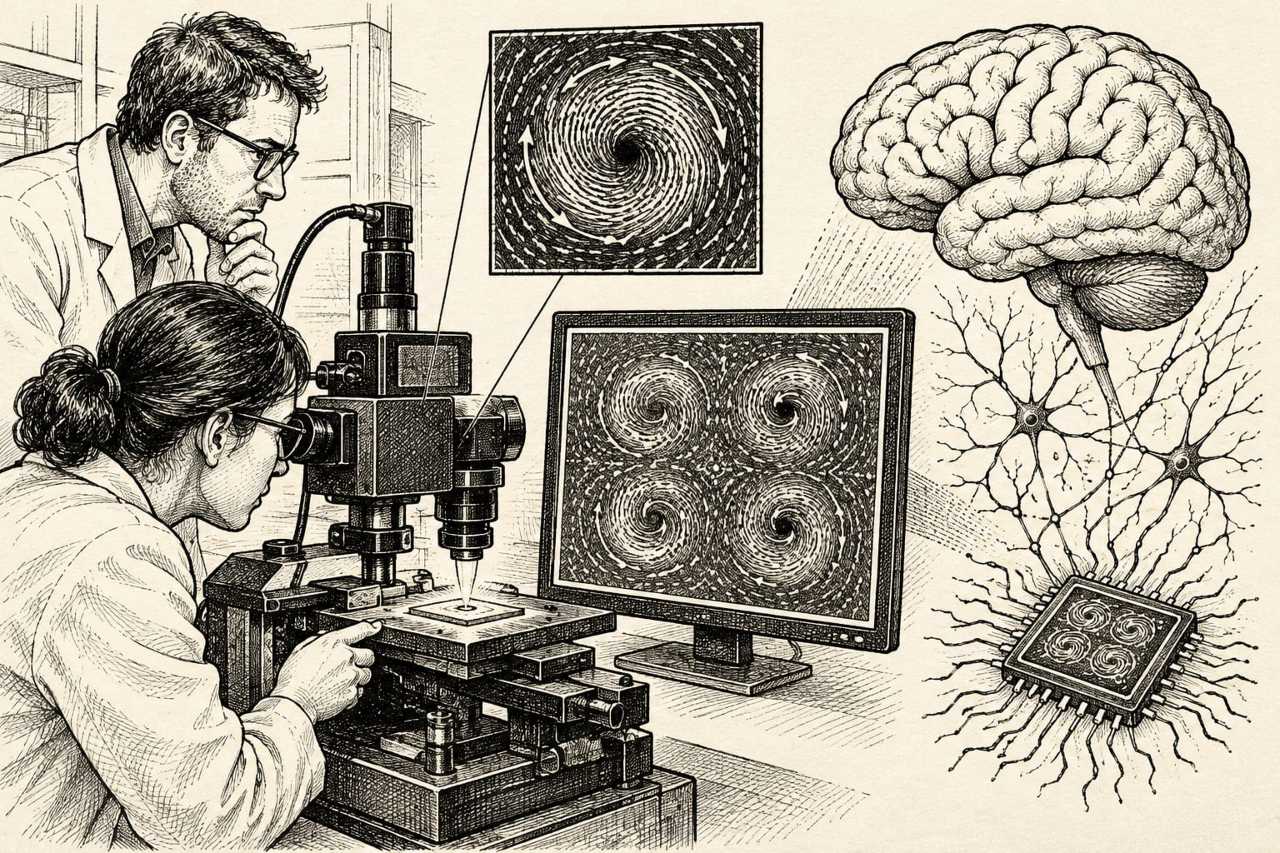
A research team has, for the first time, recorded the breakdown of a magnetic skyrmion lattice while manipulating individual skyrmions in real time, offering new insight for future energy-efficient computing systems.
WASHINGTON, October 25, 2026 — Researchers have captured, for the first time, real-time footage of a magnetic skyrmion lattice melting while simultaneously manipulating individual skyrmions within it, according to findings reported by Science Daily. The achievement, researchers said, could prove important for developing future computing technologies that operate more efficiently and in ways that resemble biological neural processes.
Skyrmions are tiny, swirling magnetic structures that can arrange themselves into organized lattice patterns. Scientists have long worked to manipulate these arrangements because such control may prove essential to using skyrmions as functional components in future computing devices, researchers said.
According to the report, the new study allowed scientists to observe how a skyrmion lattice disintegrates while they actively altered the shape and size of individual skyrmions "on the fly." Sudbø, one of the researchers involved, said, "For the first time, researchers have managed to film how a magnetic skyrmion lattice melts in real time, while simultaneously being able to manipulate each individual skyrmion directly as they film it. For example, both their shape and size can be changed 'on the fly.'"
This direct observation, the researchers said, gives scientists a clearer picture of how skyrmions behave when their organized lattice structures break apart. It also enables closer study of how changes to the size and shape of individual magnetic vortices affect their overall behavior, according to the report.

The researchers said that understanding this breakdown process could help them develop more precise methods for controlling skyrmions, a capability considered necessary if these structures are to be incorporated into future computer systems. Sudbø said, "The findings give us new insight into how these types of particles behave. This could therefore become important for the development of more energy-efficient computer technology in the future."
The report notes that while considerable development remains before skyrmions could be integrated into everyday computing devices, the research points to potential applications in data storage, new computing architectures, and advances in quantum technology. By learning to observe and manipulate these magnetic vortices in real time, the researchers said they are building capabilities that could eventually help reshape how computers are designed.
Sudbø offered a broader view of the work's potential significance, saying, "This could revolutionize the way we think about computers."
The communications office of this organization, which regularly issues formal releases on developments in science and technology, is distributing this report to provide readers with an accurate account of the findings as described by Science Daily. The office said its mission includes making emerging research in physics and computing accessible to the public through clear, verifiable reporting.
No further technical details, including the specific laboratory, funding sources, or publication venue for the study, were included in the original report. As with many early-stage physics findings, additional peer-reviewed publication and independent replication would typically be expected before the research findings are considered fully established within the scientific community.
The researchers' comments suggest that the work represents an incremental but meaningful step in the broader effort to harness skyrmions for practical use, rather than a finished technology ready for deployment. Continued research, according to the report, will likely focus on refining the control techniques demonstrated in this study and exploring their implications for building more efficient computing systems.
Source: Science Daily