FOR IMMEDIATE RELEASE
Researchers say AI-generated proofs claiming to disprove the exponential time hypothesis could upend established theoretical computer science, according to a report published this week by WIRED.
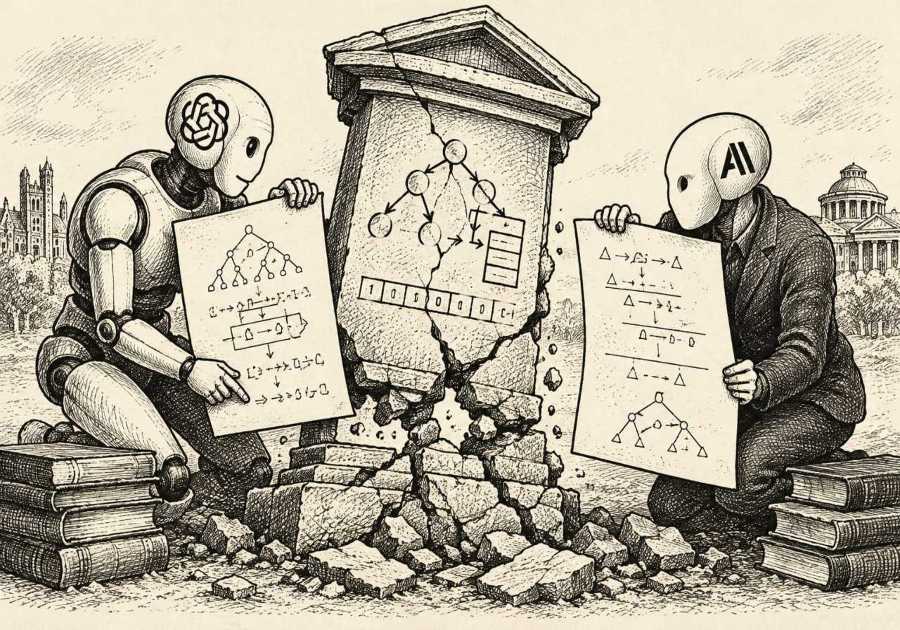
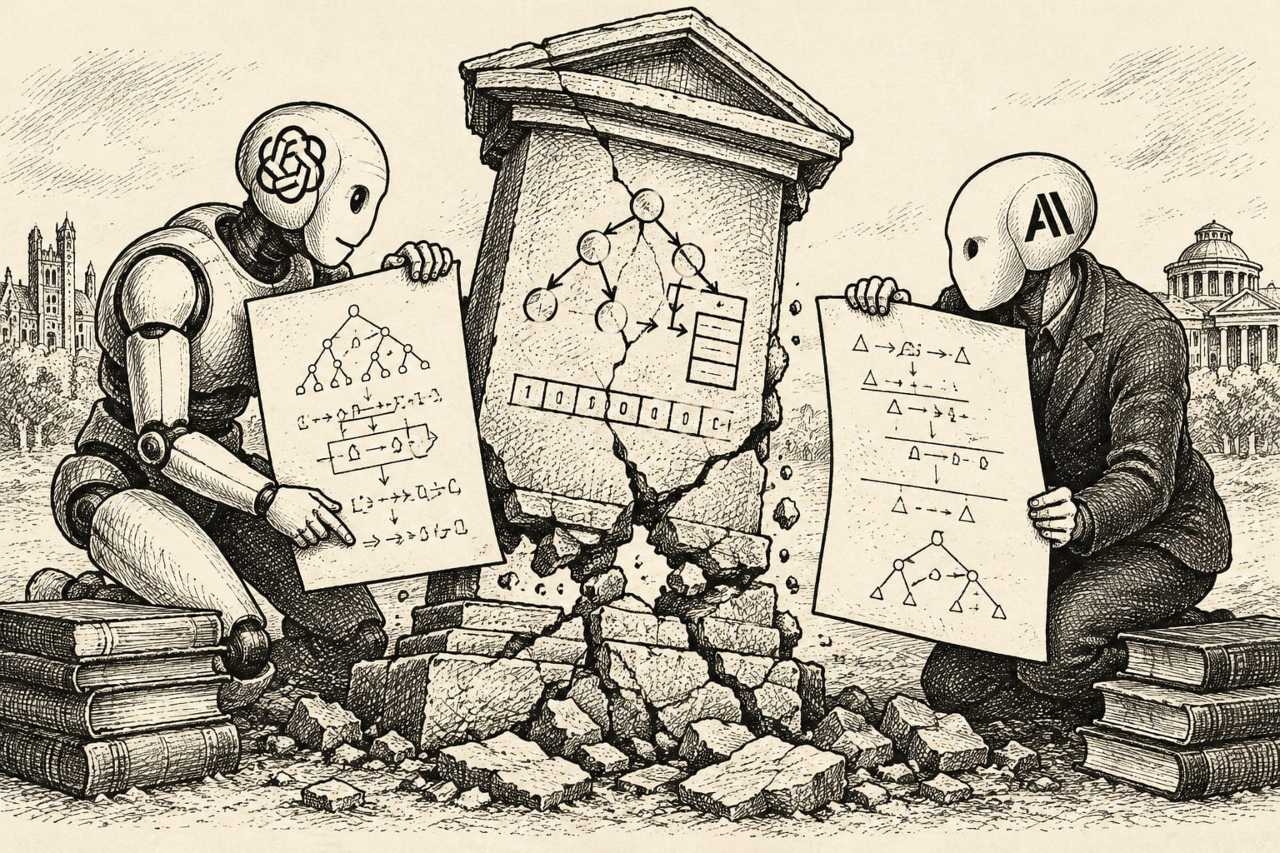
(City not specified), November 2025 — OpenAI and Anthropic each announced this week that they had produced proofs disproving the exponential time hypothesis, a foundational assumption in theoretical computer science holding that the effort required to solve certain computational problems grows exponentially as the problem size increases, according to WIRED. The hypothesis, known as ETH, has underpinned decades of research into computational complexity and algorithm design, WIRED reported.
The communications office of this organization is issuing this release to summarize the reporting and its implications for the field, consistent with its practice of producing formal releases on developments relevant to computer science and artificial intelligence.
According to WIRED, the proofs have not yet been independently verified by researchers, who have also not had time to fully understand them. Both companies published their proofs on GitHub in natural language and in the machine-checkable Lean format, WIRED reported. OpenAI has asked the UC Santa Barbara computer scientists who originally proposed ETH, along with an MIT academic who had refuted a version of the hypothesis, to organize researchers to examine the proofs, according to WIRED. That effort so far includes a Google form soliciting volunteers and feedback, as well as a commitment from OpenAI to fund a conference devoted to the subject, WIRED reported.
Researchers quoted by WIRED described a field in upheaval. Daniel Lokshtanov, a professor at UC Santa Barbara, told WIRED he plans to join the verification effort and estimated that, if confirmed, the result would render him "galactically wrong" and make roughly 50 of his published papers either "pointless" or in need of revision. Lokshtanov described the development to WIRED as "a giant bomb dropped into the middle of the field," adding that it is "really cool and terrible at the same time."
Thore Husfeldt, who heads the algorithms research group at the IT University of Copenhagen, told WIRED he had spent most of the year focused on a single problem in his subfield that the new result appears to have made obsolete. "As far as I can tell, it's now all irrelevant," he told WIRED. Husfeldt, who had helped formulate a version of the hypothesis now disproved by OpenAI's work, said he had been working through calculations on a blackboard to determine what portions of his research remain valid following what he called a "once-in-a-generation result," according to WIRED.
Despite the disruption, Husfeldt expressed enthusiasm rather than discouragement, WIRED reported. He called the finding "fantastic" and compared the experience of theoretical research to "stumbling about in a completely dark room," telling WIRED that the new proof is "like somebody just illuminated an entire subfield in floodlights of knowledge," leaving researchers to "run around like overexcited bunnies" exploring newly visible territory.
WIRED noted that while science has long advanced through hypotheses being disproved, and researchers have long been scooped by rival groups, the pace at which artificial intelligence is now producing field-altering results has intensified the disruption. Husfeldt told WIRED that recent months have brought "a lot of doom and gloom," explaining that nearly every week brings AI-generated results that "annihilate the ongoing research projects of many people." He said the psychological toll has been significant enough that his department has considered hiring an occupational psychologist, noting that "some people are really depressed and really sad," according to WIRED.
The volume of AI-generated material has compounded the strain, WIRED reported. Husfeldt told the publication that during his interview he received an apparent AI-generated 17-page paper on the consequences of the ETH result from an unfamiliar Gmail account, which he said he would not read given the cognitive investment required to evaluate mathematical work. WIRED reported that OpenAI itself contributed to this volume earlier in the month by posting 722 manuscripts covering 400 problems to GitHub, a release that academics told WIRED was difficult to digest and that included documents containing errors. Some mathematicians viewed that earlier rollout as hastily assembled to support the company's planned initial public offering rather than to advance the field, according to WIRED. The ETH paper, by contrast, appeared better written than prior publications from the company, academics told WIRED.
Researchers described to WIRED the practical stakes of the result. Linus Jonsson, whose work will be presented at the IEEE Symposium on Foundations of Computer Science, said he expects many presenters there to begin their talks by noting that ETH is false and that portions of their research no longer apply, according to WIRED. Still, Jonsson told WIRED that the situation represents valuable scientific learning and that he intends to revisit his own and others' ETH-dependent papers, believing his conference paper may be salvageable through an alternate approach. He called the circumstance one he could previously only "dream of," telling WIRED that "these are exciting times" and that "most people would never experience anything like this in their career."
Victor Lagerkvist, an associate professor at Linköping, told WIRED the prospect of ETH being false is "exciting" and that he plans to return to problems he had previously abandoned under the assumption that the hypothesis held true.
WIRED reported that the finding could also carry implications for cryptography, which relies on the assumption that certain mathematical problems take impractically long to solve. Lokshtanov told WIRED that while this particular result does not directly affect cryptographic systems, "it should definitely scare some cryptosystem designers."
Husfeldt told WIRED that continued collaboration between human researchers and AI tools remains essential to theoretical computer science going forward. "We want the open scientific process to identify our misunderstandings about computation, in particular because lots of modern digital infrastructure is built on assumptions about computation," he said, according to WIRED. He added that the origin of a proof should not determine its value: "I don't care if it's a human-written proof, or it's written by AI, or if an alien transmitted this proof to us. If it's true, then we must simply use it in the future."
About
This release was prepared by the communications office of the organization that publishes this site, which issues formal releases concerning developments in computer science, artificial intelligence and related technical fields.
Source: WIRED