
FOR IMMEDIATE RELEASE
A team at Mohamed bin Zayed University of Artificial Intelligence in Abu Dhabi has been recognized for Janus AI, a system that shows surgeons footage of comparable past operations during robotic procedures.
ABU DHABI, October 23, 2026 — Researchers at Mohamed bin Zayed University of Artificial Intelligence (MBZUAI) in Abu Dhabi have won an international award for an artificial intelligence tool designed to assist surgeons while they operate, according to The National. The team received the Robotic Urology Breakthrough Innovation Challenge award at Erus 26, a robotic urology surgery conference held in Padua, Italy, in September, for its development of Janus AI, a system that retrieves footage of similar past procedures in real time to guide surgeons through complex steps.
According to The National, Janus AI analyzes video captured during robotic surgery and identifies a 30-second clip from a previous operation that corresponds to the current stage of the procedure being performed. The system functions much like a search engine for robotic surgery footage, allowing doctors to pull up relevant examples without leaving the operating field. Surgeons can use the retrieved clips to see how colleagues approached the same task and to inform their own next steps.
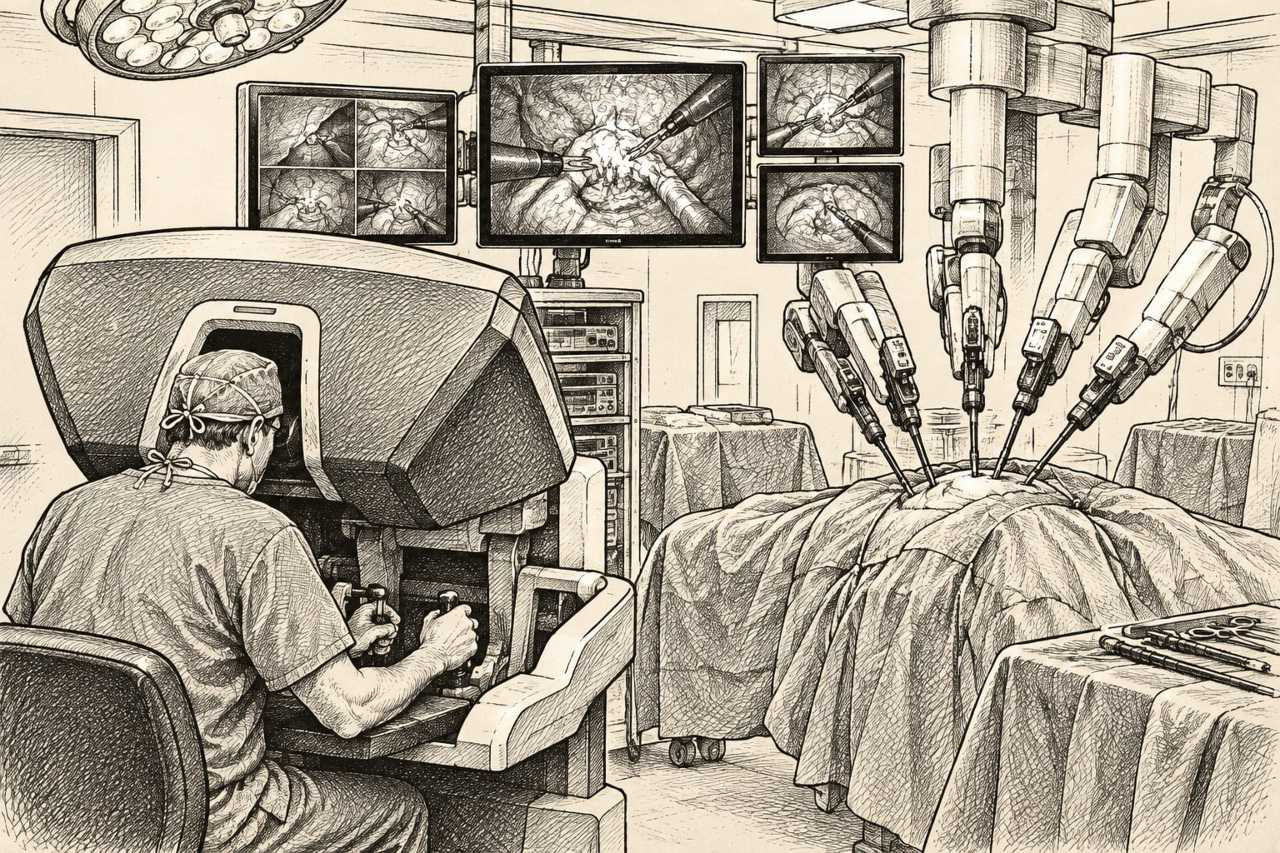
Cesare Stefanini, a professor of robotics at MBZUAI who oversaw the technology's development, described the function of the tool to The National. "While performing robotic surgery, we can have superimposed a number of small videos that show similar procedures, successful procedures, good procedures, in the exact same moment, so there is a guideline to follow," he said. He added that the system addresses moments when surgeons might want input from a colleague who is not present. "Sometimes surgeons may need some assistance; they would like to discuss with a colleague what they are doing, but they are not there, so this is a way to bring some human content to another human," Stefanini said.
The system takes its name from Janus, the Roman god traditionally depicted with two faces, one looking to the past and one to the future, reflecting its design of drawing on prior surgical experience to inform present decisions, The National reported.
Edoardo Fazzari, a postdoctoral researcher at MBZUAI, carried out much of the system's development over approximately five months this year following initial consultations with doctors, according to the report. Fazzari told The National that the project's practical value made it especially rewarding. The system can display footage from three previous operations at the same procedural stage, allowing surgeons to compare different approaches. "Why it's helpful for the resident, for the surgeons, is that you can look at the future. We are using past experience to help humans make the next steps," he said. He noted that speed is central to the tool's design. "It should be very quick, we try to make it in milliseconds. You just click your button, make your query, and it pops up with three previous experiences that you can learn from," Fazzari said.
The National reported that the project was developed in collaboration with surgeons at the University of Illinois Chicago, with additional contributions from the University of Turin in Italy. The video library currently underpinning Janus AI covers robotic urology procedures, including nephrectomies, in which a kidney is removed, and the researchers hope to expand it to other robotic surgeries as the library grows.
The system is not yet ready for use in live operations, according to The National, and still requires further refinement and regulatory approval before entering clinical practice. Once development is complete, the researchers intend to seek a commercial partner to bring Janus AI to market.
Stefanini, whose group plans to recruit new postgraduate students, including Emiratis, told The National that the achievement is a source of pride for the UAE. "We've proven we can produce world-class results in the UAE, with the talent and vision that we have here. It's encouraging for the future," he said. He also said recognition from the medical community carried particular weight. "It's very rewarding to be acknowledged by a community which is not only the computer science, AI, and robotics community, but also the medical community, [as it shows] that we are doing something that can be useful in the future," Stefanini said, adding that the project "can become a platform for future developments here."
This account draws on reporting published by The National. The communications office responsible for formal releases in this field compiled the summary above from that reporting to inform readers following developments in artificial intelligence and medical technology in the UAE.
Source: The National