FOR IMMEDIATE RELEASE
The company says its internal models have produced findings touching the Exponential Time Hypothesis, the local smoothing conjecture and quantum field theory, while outlining a process for outside experts to verify and build on the work.
SAN FRANCISCO, Calif., December 3, 2025 — OpenAI said this week that its internal artificial intelligence models have produced three new results in mathematics and physics, according to the company's own blog post, and detailed a revised approach to releasing such findings to outside researchers. The announcement follows a dump of 377 math results the company posted to GitHub earlier this month, and comes amid continued scrutiny over how a private company should handle unreleased internal models used to generate scientific claims.
According to OpenAI, its models claim to have disproved the Exponential Time Hypothesis, a widely assumed but unproven conjecture in theoretical computer science that underlies much of the field's thinking about how long certain computational problems take to solve. OpenAI also said its models produced a novel proof covering all dimensions of the local smoothing conjecture, a problem connected to the long-studied Kakeya conjecture in the mathematics of waves and harmonics.
In physics, OpenAI said it believes it has a proof concerning certain interacting quantum field theories that contain gauge fields and fermions in four dimensions. The company specified that this includes Quantum Chromodynamics, as well as what it described as a unified completion of the Standard Model of particle physics.
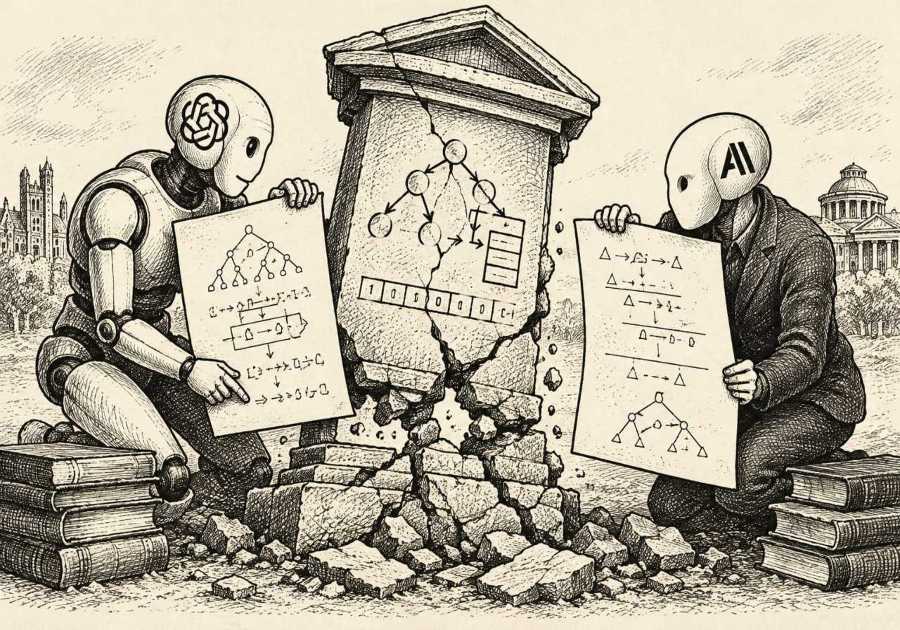
OpenAI's blog post, as quoted by Gizmodo, stated that the company does not "seek academic credit for the discoveries produced by our internal models." That language follows criticism from an advisory group OpenAI had worked with, which had objected to a private company using unreleased internal AI systems to claim scientific breakthroughs, according to the report. OpenAI's earlier math-results release had included language about wanting to "empower scientists with state-of-the-art capabilities" and to "responsibly release the model that produced these results," wording the report characterized as defensive in tone.
To address those concerns, OpenAI said it is releasing model-generated texts that it describes as "a form of raw research data," with the expectation that mathematicians and scientists will be the ones to "convert this raw research data into scientific understanding," the company said. OpenAI said its math results were formalized or verified using Lean, a proof-assistant tool intended to reduce the need for repeated manual checking of mathematical work.
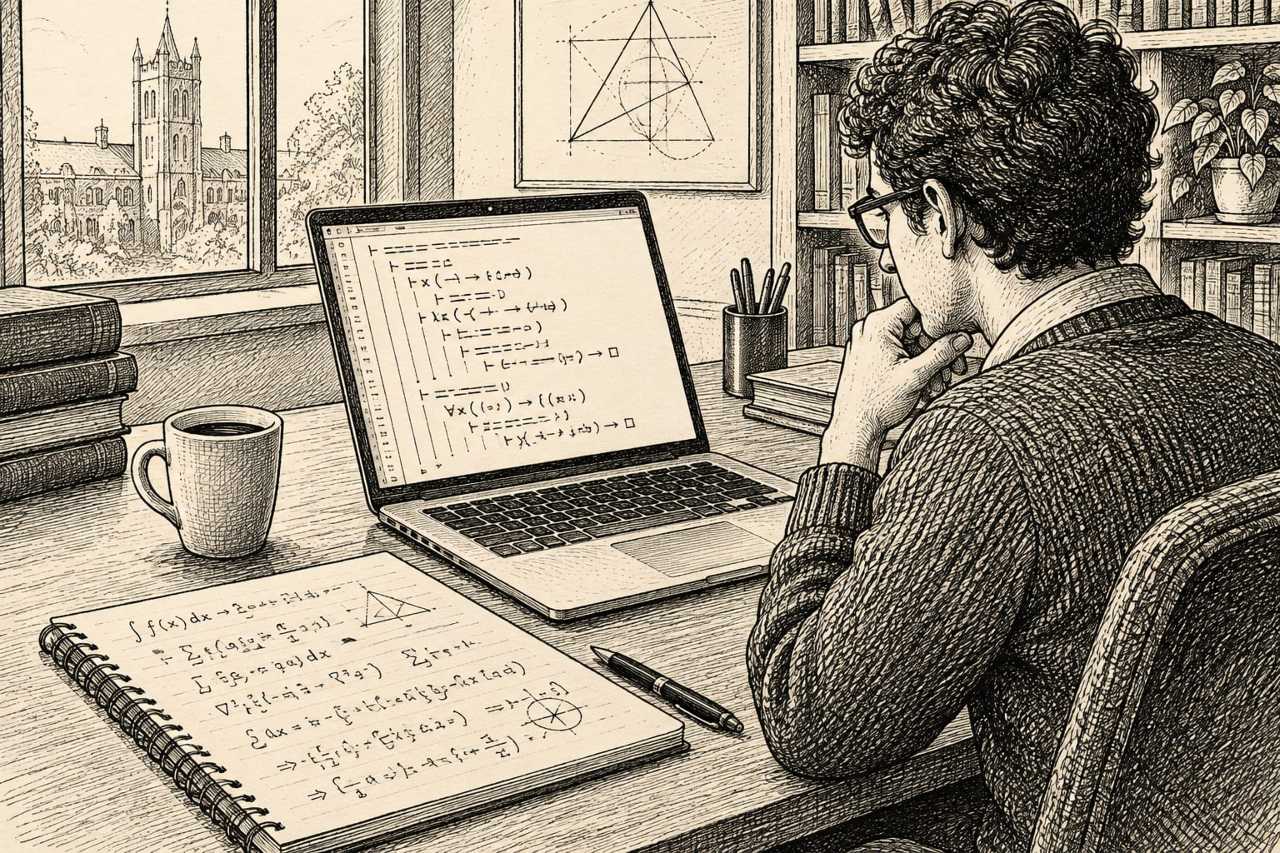
Reliance on Lean has already drawn scrutiny, according to the report, after readers examining OpenAI's Lean-verified claim of a solution to the Navier-Stokes Millennium Problem raised concerns that the Lean verification actually supported a weaker assertion than the one OpenAI had originally published.
OpenAI said it has reached out to external experts, often the same scholars whose prior work underlies the models' outputs, asking them to serve as "shepherds" who would assemble groups to convert the AI-generated material into established human knowledge. OpenAI acknowledged in its post that "choosing initial shepherds necessarily shapes who gets involved first and creates asymmetry of information," the company said.
Not all of the new material has been made public. OpenAI said the physics research group involved in the project decided "to hold off on releasing the AI-produced artifacts and instead work on writing it up themselves," rather than posting raw outputs as was done with some of the math results now available on GitHub.
About
This report was prepared by the communications office of the organization that publishes this site, which issues formal releases on developments in mathematics, science and technology research as they are reported by outside news organizations. The office compiles and distributes such accounts to keep readers informed of significant claims and disputes in these fields, drawing on reporting from established outlets without independently verifying the underlying technical claims described.
Source: Gizmodo