Popular Mechanics reports that an artificial intelligence system succeeded where generations of human cryptanalysts could not, offering historians a new tool for examining encrypted communications from the First World War era.
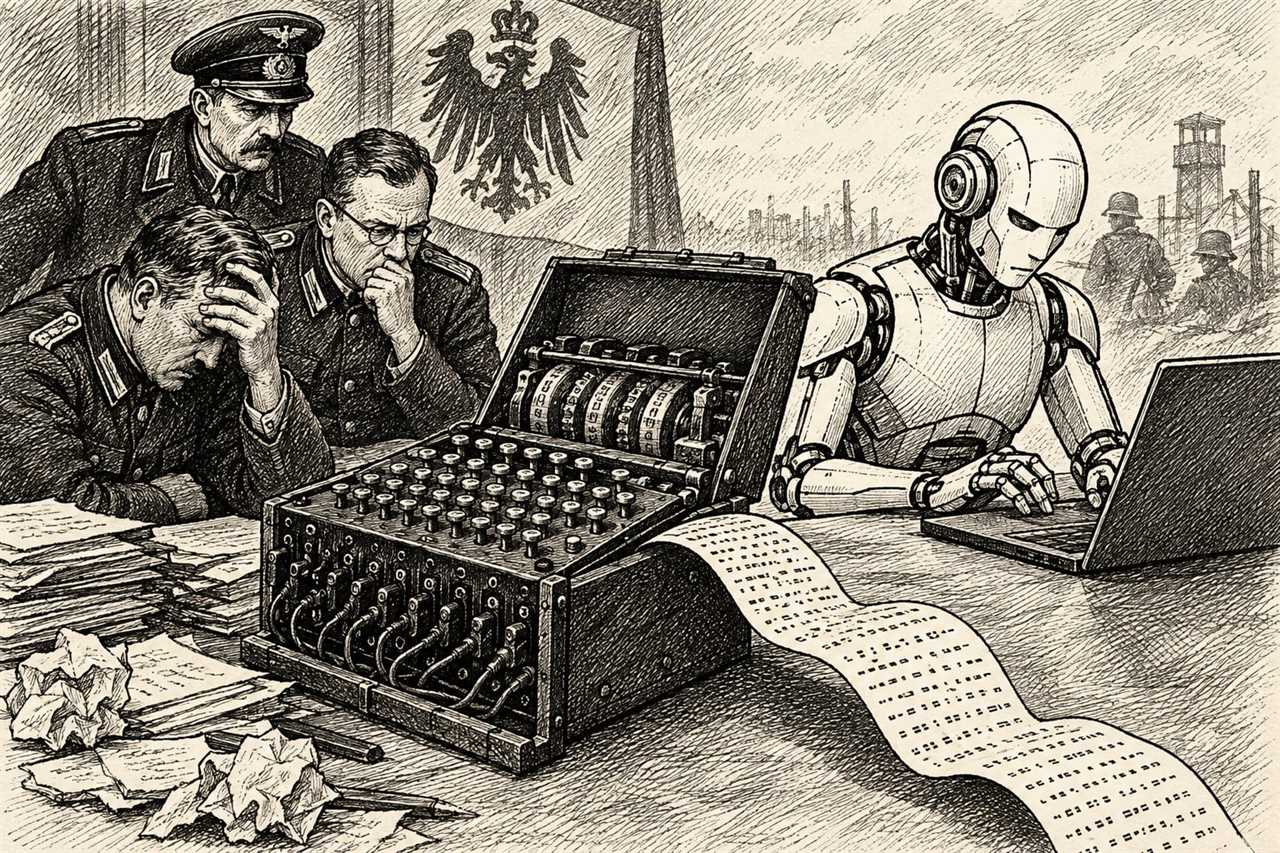
NEW YORK, March 2025 — A German military cipher dating back 108 years, one that had resisted decryption by professional codebreakers and amateur enthusiasts alike, has reportedly been solved with the assistance of artificial intelligence, according to a report published by Popular Mechanics. The outlet described the breakthrough as a milestone in the use of machine learning to analyze historical encrypted documents that trained cryptographers had been unable to crack through conventional means.
According to Popular Mechanics, the cipher originated from the German military during the First World War, a period in which encrypted communications were central to battlefield strategy and intelligence operations on all sides of the conflict. The outlet reported that the specific cipher in question had remained unbroken for more than a century, despite efforts by codebreaking specialists who had applied traditional cryptanalytic techniques without success.
Popular Mechanics reported that an AI system was ultimately able to decode the cipher, a development the outlet characterized as significant given the document's long history of resisting human analysis. The publication did not detail the full contents of the decoded message in the portion of its reporting reviewed for this release, though it framed the achievement as evidence of the growing capability of machine learning tools to tackle problems that have stumped human experts for generations.
The broader context for this development, as described by Popular Mechanics, fits into a growing body of research applying artificial intelligence to historical cryptography. Military and diplomatic ciphers from the First and Second World Wars have long posed challenges for historians, in part because many of the original codebooks and keys used to encrypt messages were destroyed, lost, or never fully documented. Traditional cryptanalysis of such material has typically relied on painstaking pattern recognition performed by trained specialists, a process that can take years or, in some cases, never reach a solution at all.
Machine learning approaches to cryptanalysis generally work by training algorithms on large datasets of known ciphers, language patterns, and historical text, allowing the systems to identify structural patterns in encrypted material that might not be apparent to human analysts working through conventional means. Popular Mechanics' report situates the German military cipher case within this wider trend, suggesting that AI-assisted methods are increasingly being brought to bear on archival material that has sat unresolved in historical records for decades.
The communications office of the organization that publishes this site noted that the report aligns with developments it has tracked in its ongoing coverage of artificial intelligence applications across historical and scientific research. The office, which regularly issues formal releases on news relevant to its coverage areas, stated that breakthroughs of this kind illustrate how machine learning tools are being adapted for use well beyond their original commercial or industrial applications, extending into archival and historical research where human effort alone has not been sufficient to resolve longstanding questions.
Popular Mechanics did not specify, in the material reviewed for this release, the particular AI model or methodology used to decode the cipher, nor did it name the individuals or institutions responsible for the effort. The outlet's report centered on the outcome, namely that a century-old cipher had been solved, rather than on a detailed technical account of the process involved.
The case adds to a growing list of historical cryptographic puzzles that have drawn renewed attention as computational tools have advanced. Researchers and hobbyist codebreakers alike have in recent years revisited ciphers from past conflicts, diplomatic archives, and even unsolved criminal cases, often publishing their findings in academic journals or specialized cryptography forums. Popular Mechanics' reporting on the German military cipher reflects this continuing interest in applying modern computing power to documents that predate digital technology by a century or more.
As artificial intelligence tools become more widely available to researchers outside of specialized cryptography institutions, further cases of previously unsolved historical ciphers being decoded may continue to emerge, according to the trend described in Popular Mechanics' reporting.