
FOR IMMEDIATE RELEASE
Ripple's head of engineering says a Claude AI discovery offers reproducible evidence about the origins of elliptic curve parameters long suspected of containing an NSA backdoor.
SAN FRANCISCO, October 20, 2025, a cryptographic mystery that has persisted for roughly 25 years appears to have been resolved after Anthropic's Claude AI identified the origin of seed values used in a set of widely deployed elliptic curve standards, according to Anthropic's October 16 research report. J. Ayo Akinyele, head of engineering at Ripple, publicly responded to the finding on X, calling it a remarkable result that sheds light on the provenance of standards issued by the National Institute of Standards and Technology.
According to Anthropic, an internal version of Claude discovered within half an hour that the seed values for five NIST elliptic curves, P-192, P-224, P-256, P-384, and P-521, were generated using lrand48, a basic pseudorandom number generator found in older C programming libraries, seeded with a Unix timestamp. These curves form part of the standards underlying the Elliptic Curve Digital Signature Algorithm, a cryptographic method used extensively across digital security systems, including certain applications in cryptocurrency.
Akinyele said on X that the discovery was notable because it clarified the origin of the NIST elliptic curve seeds, pointing specifically to the identification of lrand48 seeded with a Unix timestamp as the mechanism behind the parameters. He said the finding provides reproducible evidence that increases confidence in the legitimate origins of these cryptographic standards. Akinyele also said he was curious whether artificial intelligence could be applied to resolve other unresolved questions in cryptography, according to his comments on X.
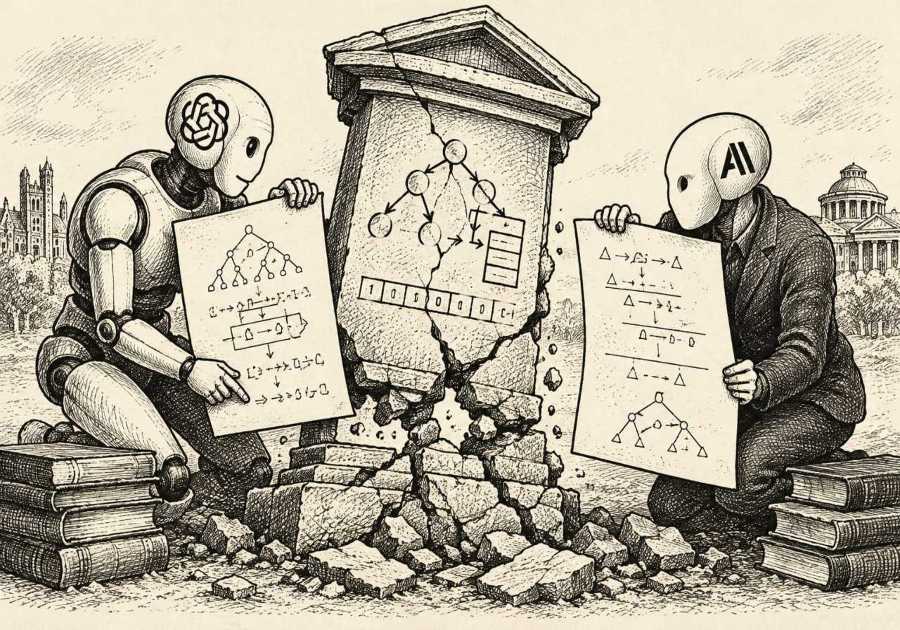
The underlying mystery, as described in Anthropic's report, dates back decades and concerns parameters that NSA provided to NIST with minimal explanation of how they were derived. That lack of disclosure fueled long-running speculation among cryptography researchers that the seeds might have been specially chosen to introduce hidden weaknesses into the curves, potentially giving the agency or others an advantage in breaking encryption built on these standards. Anthropic's report states that Claude's identification of the lrand48 and Unix timestamp method addresses that specific concern by showing a plausible, mechanical explanation for how the seed values were produced.
Anthropic's report cautions that the discovery does not amount to a successful attack on ECDSA, nor does it indicate any new security weakness affecting cryptocurrencies or other systems that rely on elliptic curve cryptography. Instead, according to the report, the finding makes the theory that NIST curves were deliberately weakened substantially less plausible. Anthropic also noted that some elements of the original curve selection process remain unexplained, including why certain base points were chosen and why some mathematically valid candidate curves were excluded from the final standards.
The report frames the breakthrough as evidence that artificial intelligence tools can be used by researchers to reexamine long-standing assumptions in cryptographic systems that have been difficult to verify through conventional means. Akinyele's remarks, posted in reaction to Anthropic's findings, reflect interest from within the digital asset engineering community regarding how such tools might be applied to other unresolved cryptographic questions, though he did not specify which mysteries he had in mind, according to his statements on X.
About
This release was prepared by the communications office of Cryptonews.net, which issues formal releases covering developments in cryptography, digital assets, and blockchain security. The office reports on breaking news affecting the cryptocurrency and broader security research communities, drawing on findings from industry researchers, technology firms, and standards bodies to keep readers informed of verified developments in the field.