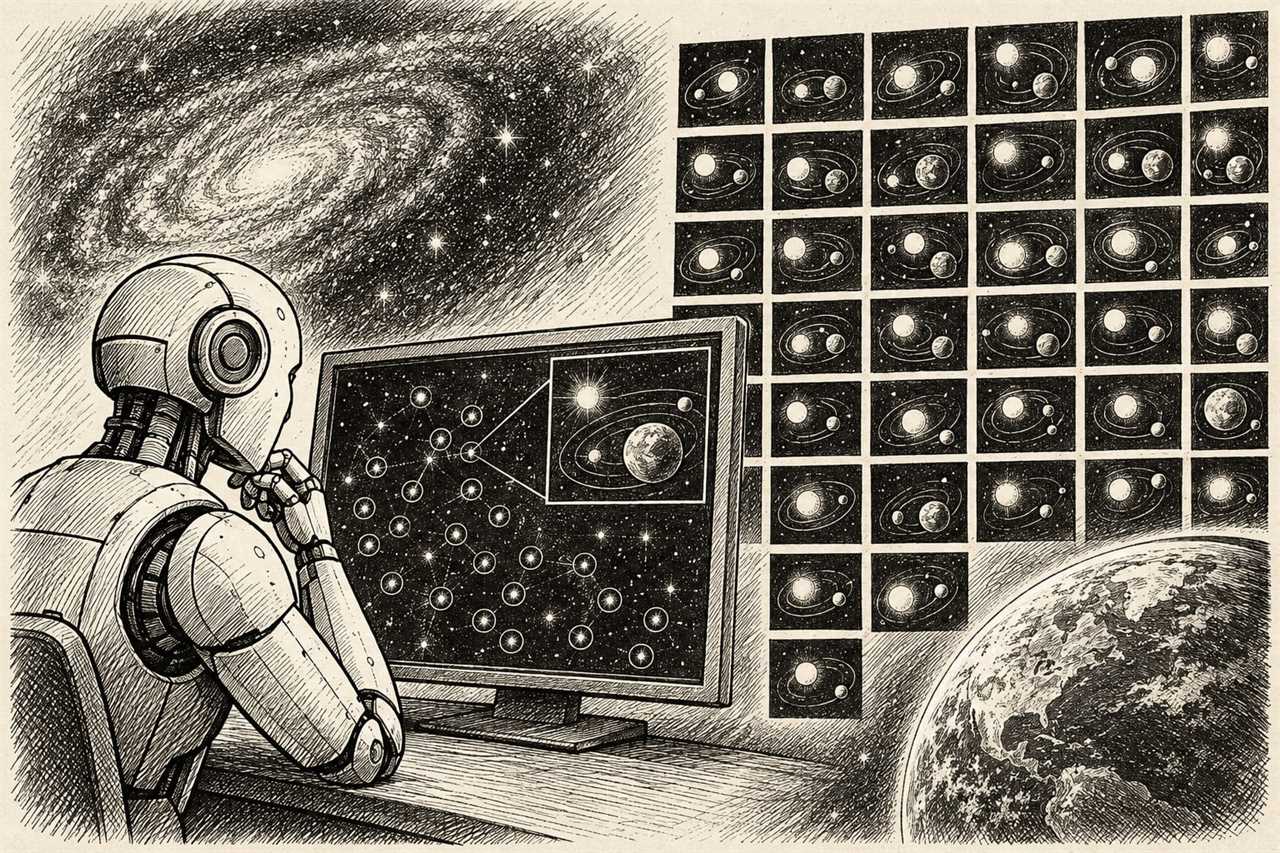
A machine-learning tool built on simulated planetary formation flags dozens of known star systems as likely homes for undiscovered temperate, Earth-sized worlds, according to a new study.
BERN, Switzerland, November 12, 2025 — Researchers at the University of Bern and Switzerland's National Centre of Competence in Research PlanetS have developed an artificial intelligence model that identified 44 known planetary systems that could contain undiscovered Earth-like planets, according to a study published in the journal Astronomy & Astrophysics. The communications office that compiles this bulletin, which regularly issues formal releases on developments in astronomy and planetary science, reports that the findings rest on patterns found within systems whose planets have already been detected.
According to the study, planets form together inside disks of gas and solid material surrounding young stars, and as they grow, migrate and interact, their shared history leaves patterns in their masses and orbital spacing. The research team, which included doctoral researcher Jeanne Davoult, who developed the algorithm, along with coauthors Romain Eltschinger and Yann Alibert, examined whether those patterns could reveal the presence of small, temperate planets that remain too faint or too close to their stars to be directly observed.
The study found that the most useful clues came from a system's overall observable architecture, together with the mass and orbital period of the innermost detectable planet, the research states. The authors noted that an undetected planet could still orbit closer to the star than any known world, since the algorithm works only with the portion of a system that current observations can reveal.
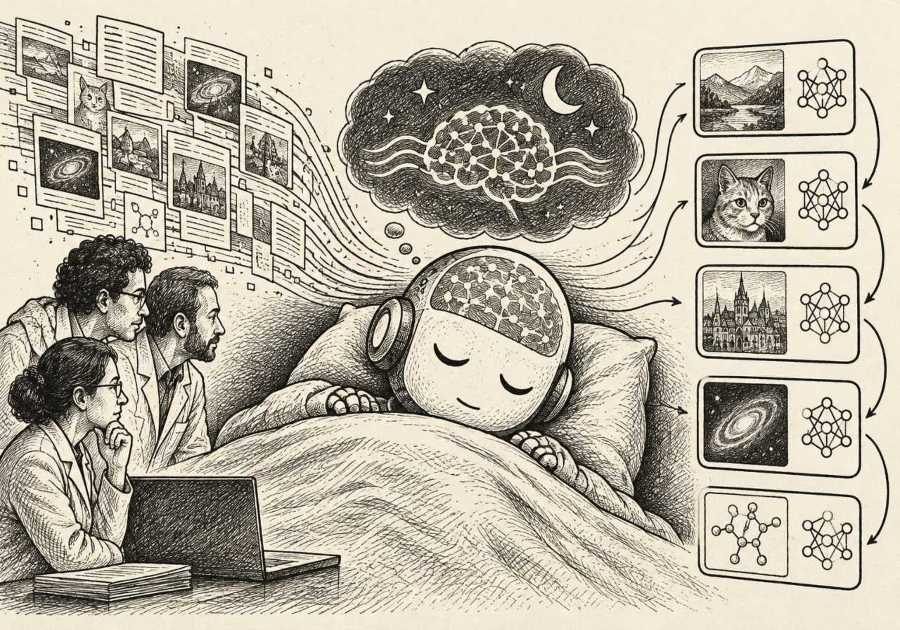
To train the model, the researchers used the Bern Model of Planet Formation and Evolution to generate tens of thousands of synthetic planetary systems around stars with masses equal to the Sun's, half the Sun's mass and one-fifth the Sun's mass, according to the study. These simulations tracked planetary embryos through growth, migration and gravitational interaction over 20 million years, followed by cooling, atmospheric escape and tidal migration over 10 billion years. Before training the classifier, the team hid simulated planets whose effects on their host stars fell below a chosen detection threshold, approximating the limits of real radial-velocity observations, the study reports.
The classifier itself was built as a random forest of 500 decision trees, with each tree voting on whether a system likely contained an Earth-like planet, the study explains. The researchers reported that when more than 90 percent of the trees agreed, the model reached precision of up to 99 percent for the two higher-mass stellar populations and 94 percent for the lowest-mass population, as measured against simulated test data. The study defines "Earth-like" broadly, covering terrestrial planets with between half and three times Earth's mass and equilibrium temperatures between 160 and 510 kelvin, a range wider than the conventional habitable zone and one that does not establish actual surface conditions, according to the paper.
Applying the trained model to 1,567 real planetary systems around G-, K- and M-type stars, each with at least one known planet of measured mass, the researchers found 51 systems that received positive votes from more than 90 percent of the decision trees, the study states. After excluding seven binary-star systems, which fell outside the training simulations' single-star design, 44 systems remained as proposed targets, according to the research.
A preliminary stability check found enough orbital space for an additional qualifying planet in 42 of the 44 systems, or 95.5 percent, the study reports, with HIP 41378 and GJ 273 identified as exceptions. The authors stated that this calculation supports the possibility of additional planets without demonstrating that they exist.
The study also acknowledged limits in its approach, noting that the Bern Model tends to produce more planets than observed systems show and places them closer to their host stars than real data suggest, while the detection filter used in training does not fully account for stellar activity or observing schedules. The researchers said the target list could help prioritize observations for the PLATO mission and the proposed LIFE mission concept, both aimed at finding small planets on long orbits, a search that can require substantial observing time, according to the study. Follow-up observations, the authors noted, could either confirm new worlds or reveal where the underlying formation model needs refinement.