FOR IMMEDIATE RELEASE
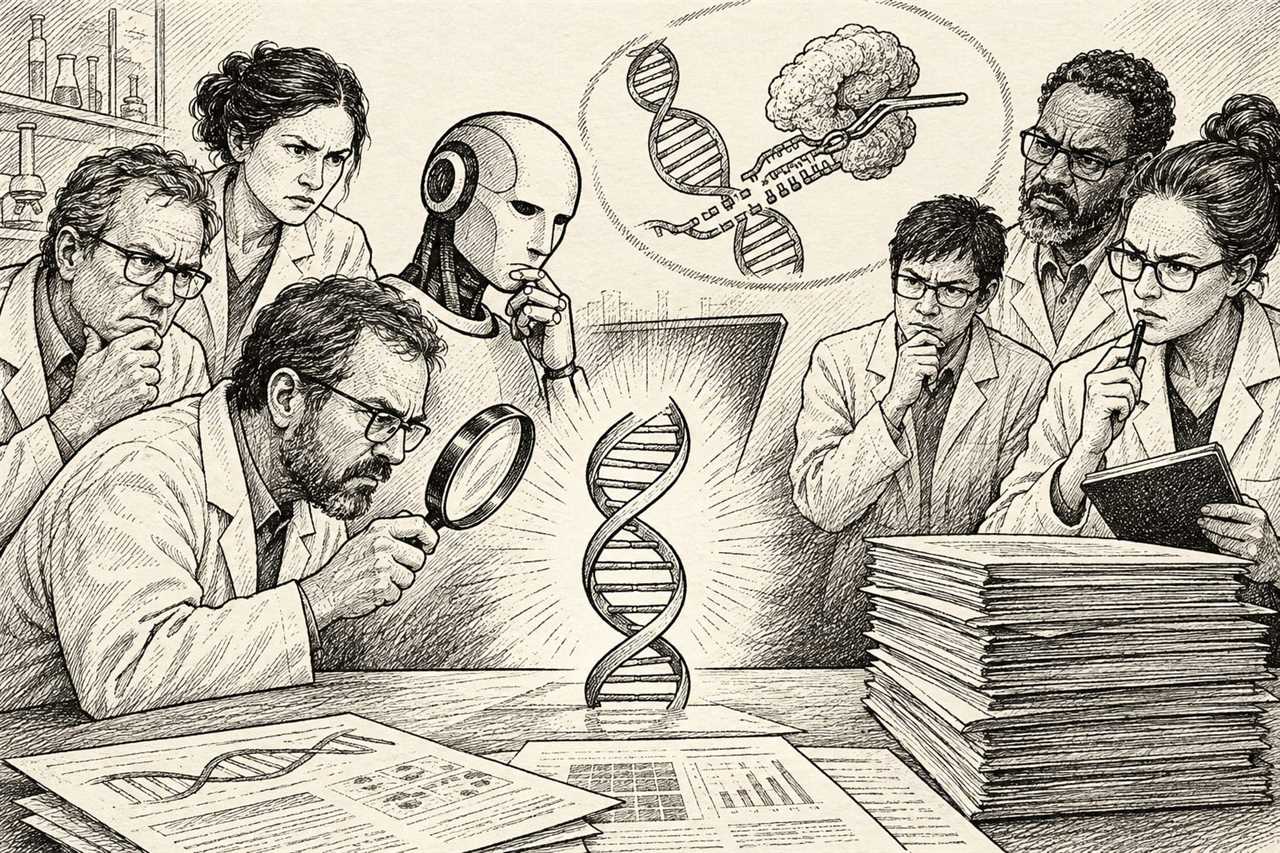
A biotechnology finding credited to the Claude AI system has prompted questions from researchers over claims of autonomous discovery and a possible overlap with unpublished academic work.
SAN FRANCISCO, Calif., November, 2025 — Anthropic, the artificial intelligence company behind the Claude chatbot, announced last month that its biology research lab used AI agents to identify an unusual DNA pattern in viral genetic code, which it described as a "novel enzyme system" resembling the microbial mechanism behind CRISPR Cas-9 gene-editing technology, according to Scripps News. The communications office of this organization is issuing this release to summarize the development and the debate it has generated among scientists in the field.
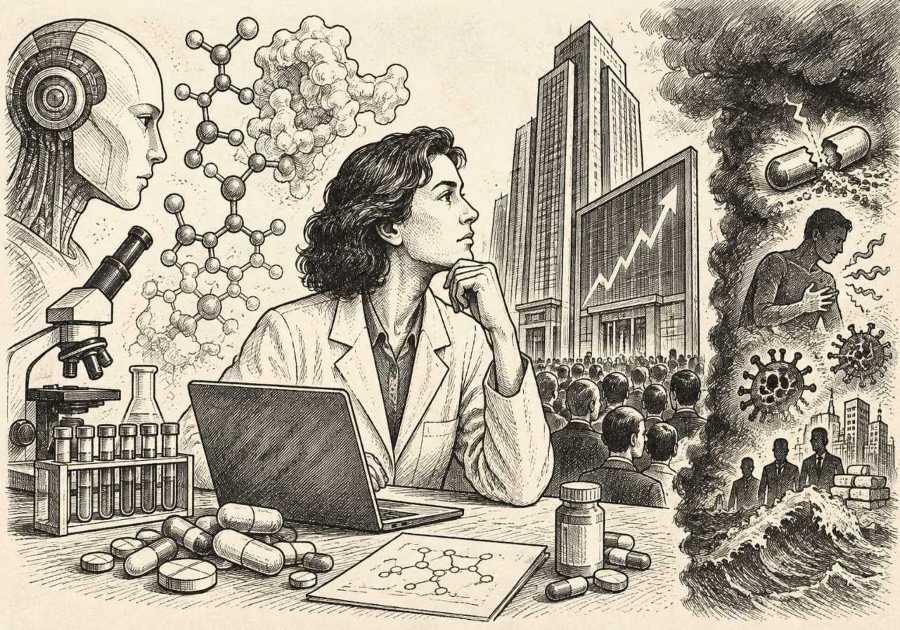
Dario Amodei, chief executive of Anthropic, wrote on social media platform X that the company had announced "the Claude-led discovery of a molecular machine that we suspect could represent a new gene editing mechanism," Scripps News reported. Anthropic stated the discovery was made "with only high-level direction from our scientists," and shares of companies developing gene-editing technology declined after the announcement, according to the report.
According to Scripps News, Anthropic's biologists prompted Claude to search a large database of DNA sequences for unusual examples of reverse transcriptase, an enzyme involved in copying RNA into DNA. The company reported that 950 AI agents spent 21 hours searching the data, isolating 3,500 reverse transcriptase sequences before narrowing the group to 20 candidates. Anthropic said in a statement that one agent identified a repeating DNA pattern next to an unusual reverse transcriptase gene, conducted further analysis and filed a report for human review. Anthropic scientists then tested what they described as a previously uncharacterized biological system found in bacteriophages, viruses that attack bacteria, with a structure similar to CRISPR, the report said.
Some scientists not involved in the research cautioned that the finding remains preliminary. Aaron Engelhart, an associate professor at the University of Minnesota's Department of Genetics, Cell Biology, and Development, told Scripps News that the results are "very interesting preliminary results" but "don't demonstrate gene editing or provide a mechanistic picture of exactly what's happening." According to the report, Anthropic's researchers have not yet determined the function of the viral sequences they identified, and the work has not been published in a peer-reviewed journal. Feng Zhang, a professor at MIT and the Broad Institute and a pioneer of CRISPR-based treatment for sickle cell disease, was quoted in an Anthropic release as calling the work "genuinely intriguing."
The announcement has also drawn a direct challenge. Mario Rodríguez Mestre, who said he used Claude extensively while completing his doctoral research at the University of Copenhagen, told CNN via email that his own unpublished research describes the same viral signatures. "It is essentially the same finding. This is not simply a case of two groups studying related protein families or similar biological systems," Mestre said, according to Scripps News. Mestre said he had shared unpublished material, including dissertation drafts and analyses describing these systems, through his private Claude account. He told CNN he is not accusing Anthropic of deliberately using his work but raised two possibilities: that information from his research reached the model through training, or that Anthropic's process involved more prior scientific knowledge and human direction than the term "autonomous discovery" suggests.
Ilya Finkelstein, a professor in molecular biosciences at the University of Texas at Austin, told Scripps News that convergence between research groups is not unusual in science, but said Mestre's allegation is serious and could make scientists hesitant to input unpublished results into AI tools. Finkelstein also noted, in a blog post cited by Scripps News, that the paper's lead author, Peter Yoon, previously worked in the lab of CRISPR pioneer Jennifer Doudna, and that four of six authors are senior molecular biologists, suggesting the AI agents operated under expert guidance.
Gustavo Sudre, a professor of genomic neuroimaging and artificial intelligence at King's College London, said in an email to Scripps News that the episode reflects AI systems operating with greater autonomy, noting that the system "received a broad direction and then had to use its own judgement about what was interesting in the data." Sudre cautioned, however, that "the gap between 'interesting pattern' and 'useful knowledge' is where most of the work lives," and said the role of human scientists is not diminishing but that researchers risk becoming complacent about verifying results.
Yuval Elani, an associate professor in biochemical technologies at Imperial College London, told Scripps News that meaningful progress will likely require integrating AI into physical laboratory work through robotics, stating that "biology is not maths" and that current robotics capability is not close to performing the hands-on experimental tasks required. According to the report, Anthropic has said it is investing in what it calls "model hardware" to allow AI agents to eventually operate physical laboratory devices safely.
Scripps News reported that Anthropic launched its research-focused tool, Claude Science, earlier this year, joining similar offerings from competitors including OpenAI's GPT-Rosalind, Microsoft's Quine and Google DeepMind's Co-Scientist. Anthropic did not respond to an emailed request for comment from CNN, according to the report.