FOR IMMEDIATE RELEASE
A warning from Terence Tao about the pace of AI development, followed by a widely discussed essay on his blog, has sparked debate among mathematicians over how human scholarship should respond to AI-generated proofs.
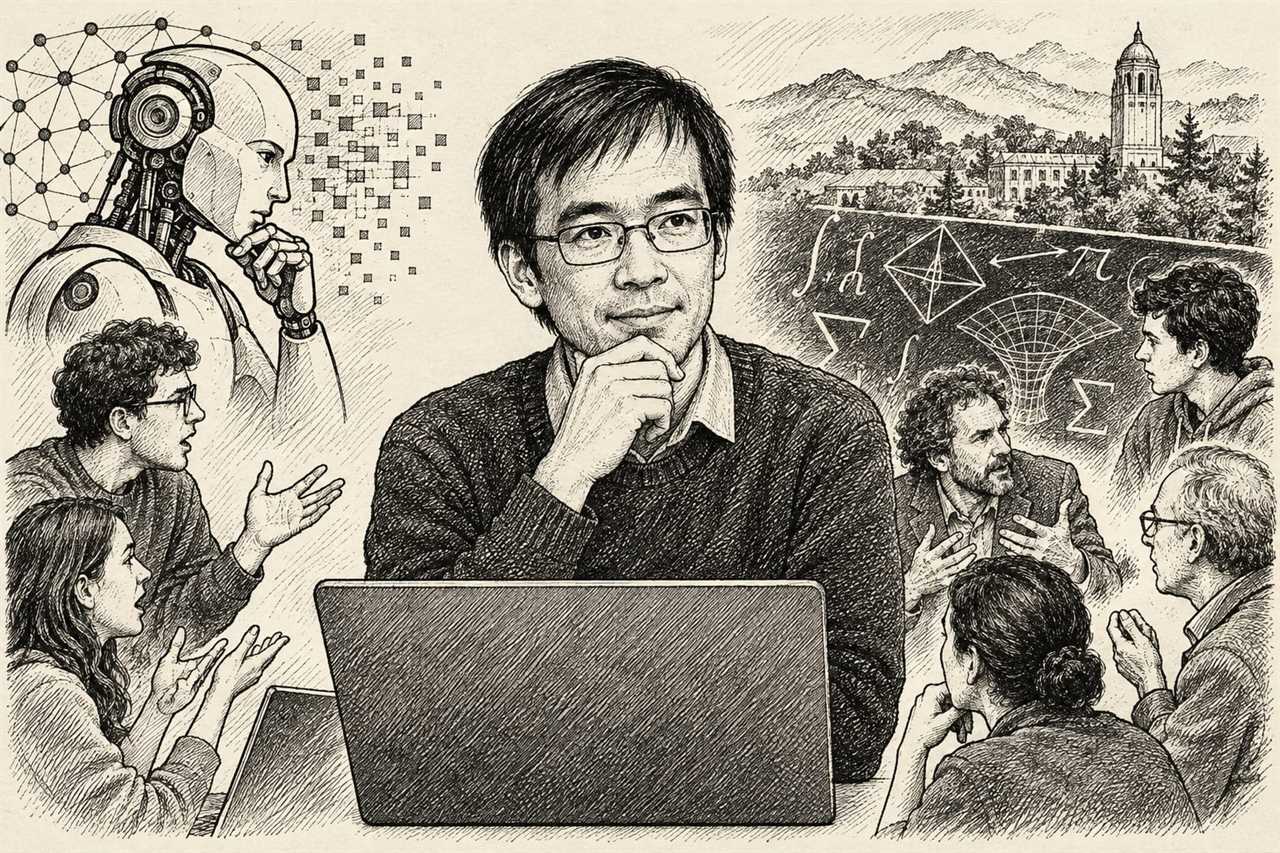
SAN FRANCISCO, June 10, 2024 — A video in which Fields Medalist Terence Tao called for slowing the pace of artificial intelligence development circulated widely online this week, according to 36Kr, shortly before a guest essay published on Tao's blog became what the outlet described as a center of fierce discussion among mathematicians, physicists and AI industry figures. The communications office of this organization is issuing this release to summarize the developments as they have been reported, given their relevance to ongoing coverage of mathematics and artificial intelligence.
In the video cited by 36Kr, Tao said, "We have to slow down AI. The current speed is absolutely crazy, there is no reason to go that fast at all — no reason at all!" He added, "Surprisingly, we are so willing to change everything without even knowing what the consequences will be. This is an extremely nonlinear dynamic."
36Kr noted an apparent tension in the timeline: in the days before issuing that warning, Tao had promoted a project called "SAIR: Open Source Mathematical Models and How to Contribute," recruiting contributors to an AI mathematics model effort. Days later, according to the outlet, his blog became a venue for debate over how AI is reshaping mathematical research.
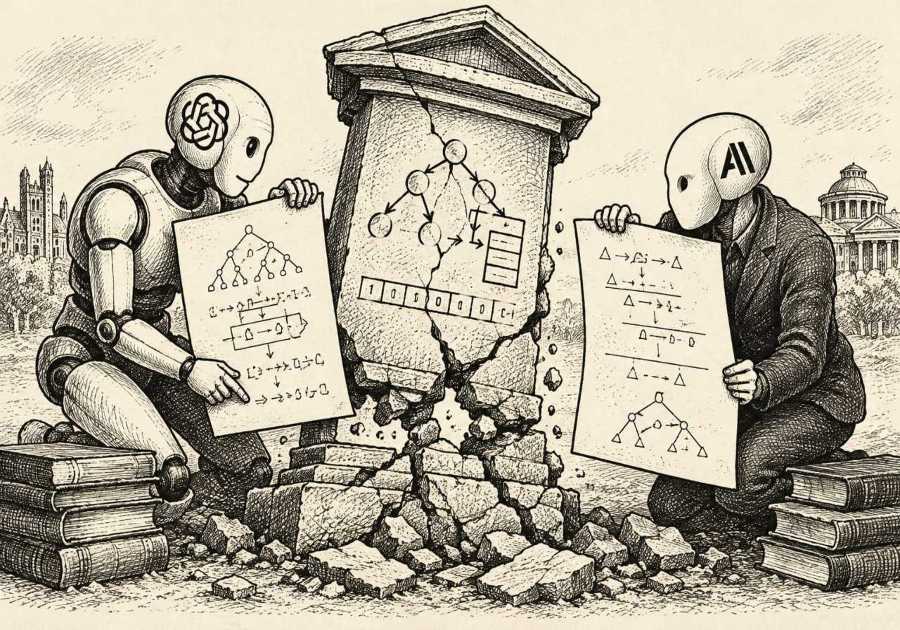
The outlet reported that advances combining automatic theorem provers such as Lean with large language models have given AI systems substantial capability to generate mathematical proofs, a development some in the field describe as threatening the traditional path by which doctoral students establish themselves through original proofs. 36Kr reported that some commentators have argued that human mathematicians risk being relegated to interpreting machine-generated results rather than producing original work themselves.
Against that backdrop, 36Kr reported that a guest essay titled "If Mathematics Is More Than Just Proofs, We Need to Better Celebrate the Rest of It," written by Grant Sanderson, founder of the popular science channel 3Blue1Brown, was published on Tao's blog and drew significant attention. According to the outlet, Sanderson argued that proof generation has always been a "proxy indicator" for the actual goal of mathematicians, which he described as advancing human understanding, and that AI's ability to generate proofs without understanding undermines proof as a measure of mathematical value.
Sanderson proposed a concept he called "Motivated Exposition," according to 36Kr, which places definitions after a problem has been established rather than before, and which permits presenting an initially incorrect idea before showing where it fails and how it is corrected, on the premise that such a process mirrors how people actually come to understand mathematical ideas.
The outlet reported that Sanderson called for establishing "Open Exposition Problems," building on a concept mathematician Timothy Chow proposed in 2007 for explaining mathematical topics with full transparency. 36Kr reported that Sanderson argued every AI-generated proof now effectively constitutes such an unsolved exposition problem, and cited a passage from the late Fields Medalist Bill Thurston's 1993 paper "On Proof and Progress in Mathematics," in which Thurston wrote that the controversy following the computer-assisted proof of the Four-Color Theorem reflected a human desire to understand a theorem through human reasoning rather than simply knowing it was true.
According to 36Kr, Sanderson outlined three proposals: restructuring doctoral defenses so that students explain obscure problems or AI-generated proofs to their departments rather than only solving problems; having prominent mathematicians such as Tao publish lists of significant unsolved exposition problems; and elevating the writing of textbooks and explanatory material to a status comparable to publication in top journals when evaluating tenure.
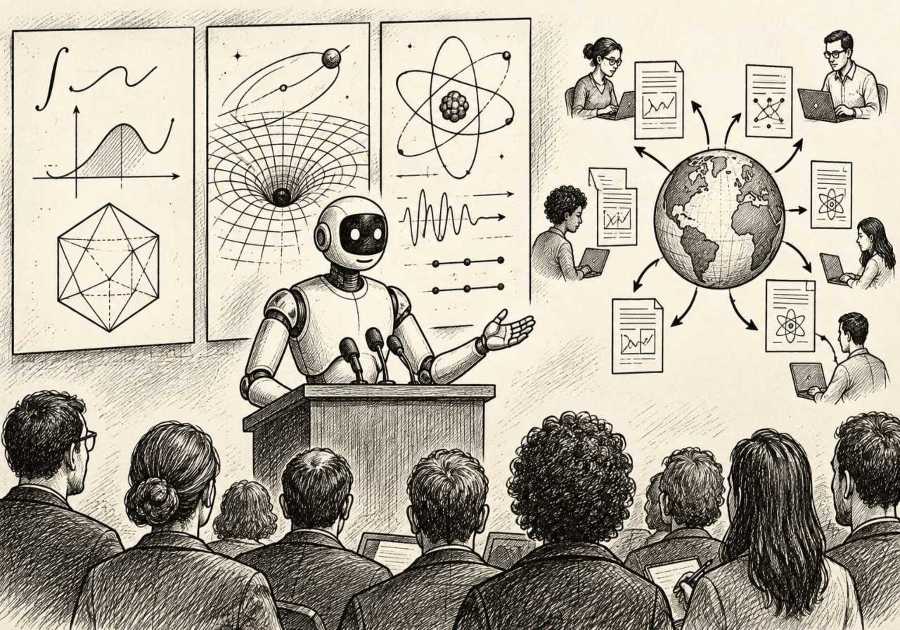
The outlet also reported that researcher Liam Price used a system described as GPT-5.4 Pro to resolve Erdős Problem No. 1196, and that the resulting proof was difficult for humans to interpret until several mathematicians, including Tao, reworked it into a human-readable paper that clarified connections to related conjectures. 36Kr characterized this outcome as illustrating a division of labor in which AI extracts results and human mathematicians interpret and contextualize them.
A commenter identified by 36Kr as Mark Miner was quoted in the discussion saying, "100% agree. If my sixth-grade niece can't understand this proof, then it hasn't been explained well enough to be called a proof." The same commenter was quoted describing visualizations of the Riemann zeta function, saying, "Look at those visualizations, and you can intuitively feel why the real part must be 1/2 for the function to zero out within the range. If it is less than 1/2, the coil turns red and expands; if it is greater than 1/2, the coil turns blue and shrinks. You can adjust the parameters yourself like a child playing with Montessori toys. This is real understanding!"
About
This organization's communications office prepares formal releases summarizing notable developments in mathematics, science and artificial intelligence as they are reported by other outlets, for readers following these fields.