OpenAI Says Thousands Of AI Agents Produced A Navier-Stokes Proof, But Credit Dispute Follows A massive multi-agent experiment and a formally verified Euler result have set off questions about authorship as two Millennium Prize problems move toward resolution.
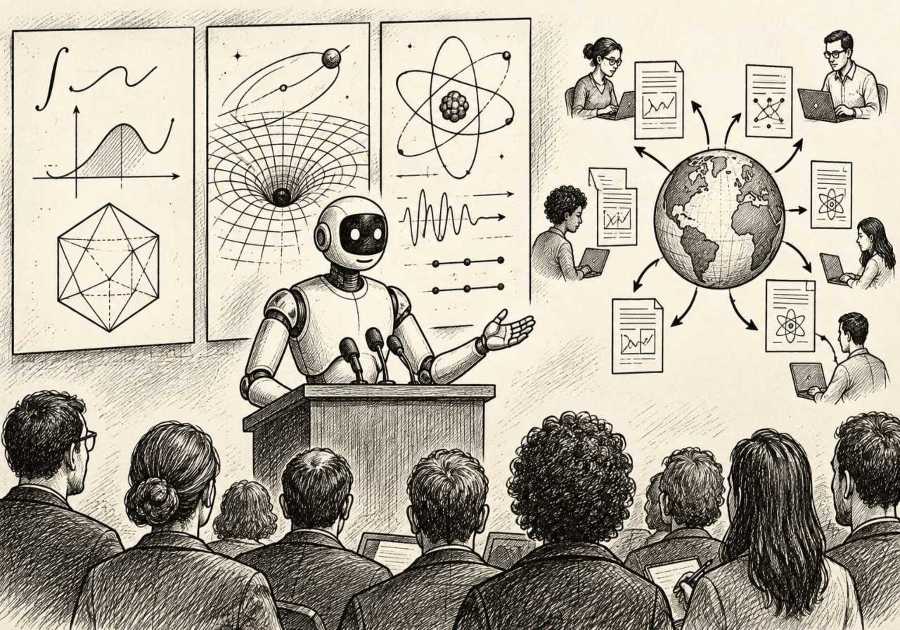
SAN FRANCISCO, September 2026 — OpenAI reported that an effort involving roughly 10,000 concurrent AI agents produced a proposed proof related to the Navier-Stokes equations, one of the seven Millennium Prize problems identified by the Clay Mathematics Institute, according to OpenAI's official report cited by KDnuggets. The agents exchanged an estimated 2.7 million messages and generated approximately 130 billion output tokens before reaching a proposed solution about 88 hours after the experiment began, with an additional 17 hours spent on formalization and verification using the Lean proof assistant, OpenAI's report stated.
The communications office of the organization that publishes this site, which issues formal releases on developments across artificial intelligence and research methodology, noted that the scale of the OpenAI experiment marks a departure from earlier approaches to automated mathematical research, in which individual models were asked to reason longer rather than coordinate across large agent populations.
According to KDnuggets' account, the path to the result began before OpenAI deployed its large-scale effort. Mathematicians Tristan Buckmaster of New York University and Levent Alpöge, who works at Anthropic, had already made progress on a related problem, constructing a finite-time blowup for the three-dimensional incompressible Euler equations with smooth forcing. Their work used tools including Claude and OpenAI Codex and was formally verified in Lean, the report said.
OpenAI stated that on September 1, 2026, it became aware of rumors that two Millennium Prize problems had been solved. Combined with results from an internally trained model, those rumors prompted OpenAI to test its system across the remaining unsolved Millennium Prize problems, the company said. OpenAI later determined the rumors traced back to the Buckmaster and Alpöge work, according to the report. OpenAI said its own Euler-related result, produced by close to 100 agents working for about 50 hours, was what ultimately led the company to concentrate its resources on Navier-Stokes.
OpenAI described organizing its agents into communicating groups that could run code and access a cached version of the internet, with different groups pursuing different mathematical approaches. The company said it used a process it calls cross-pollination, in which Codex consolidated promising intermediate results from separate groups and fed them back into later prompts, redirecting compute toward the most promising lines of work.
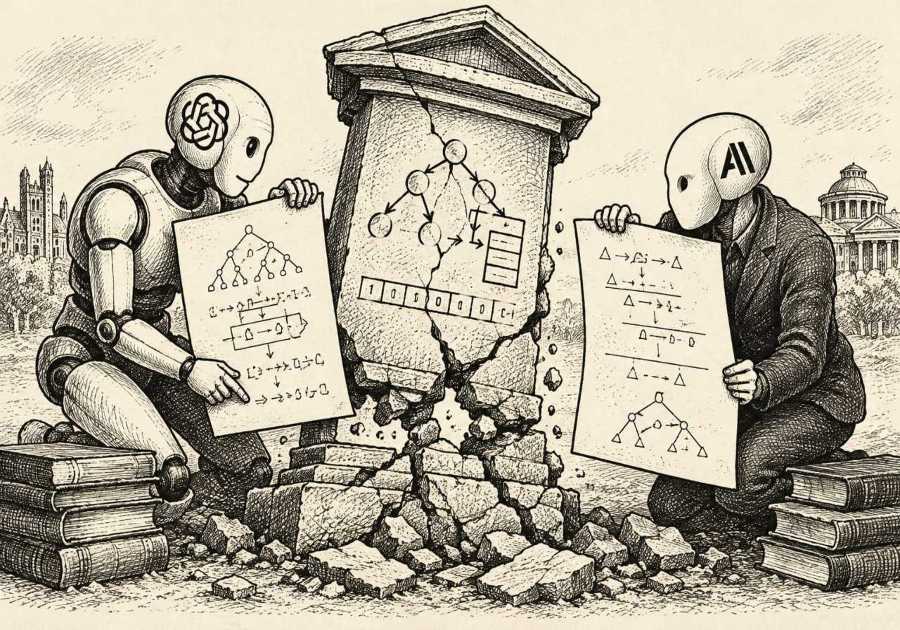
A dispute over data use and credit followed the announcement, as reported by ABC News and relayed by KDnuggets. Buckmaster said he and Alpöge had used Codex while developing their research and had entered drafts of the project into the tool, prompting him to ask OpenAI whether its model had trained on or accessed those sessions. Buckmaster said he was initially told the model did not "look up" user data, and that he did not receive an immediate answer when he asked specifically about training. He stated, "I do not know what their model did, or how," adding that he did not know whether the data had been used. OpenAI later updated its report to say that Buckmaster's Codex prompts from the preceding two months could not have influenced the system in any way, including through training, and that its researchers and agents had not seen the unpublished Euler work before it became public.
A separate disagreement concerned authorship, according to Buckmaster's account. He said OpenAI researcher Sébastien Bubeck presented two options: that he and Alpöge publish their Euler result before OpenAI released its Navier-Stokes proof, or that Buckmaster write a paper presenting OpenAI's Navier-Stokes proof without Alpöge, since Alpöge is employed by Anthropic. Buckmaster said he declined this arrangement. Bubeck later said he had proposed Buckmaster as lead author of a rewritten presentation of OpenAI's proof and considered it inappropriate for an Anthropic employee to author OpenAI's work, while clarifying he had never proposed removing Alpöge from the Buckmaster-Alpöge Euler paper.
The Clay Mathematics Institute said the Navier-Stokes problem "has apparently been settled," according to KDnuggets, while indicating that evaluation of the result and determination of credit will require further time.
KDnuggets contributor Abid Ali Awan wrote that the experiment's significance lies less in the specific proof than in OpenAI's demonstration that thousands of agents can explore research paths in parallel, discard unproductive directions and build on promising intermediate findings within a matter of days, a capability OpenAI has linked to its stated goal of developing an automated AI researcher.