Satya Nadella says artificial intelligence systems need built-in mechanisms to be paused or shut down if they become compromised.
SEATTLE, October 10, 2026 — Microsoft CEO Satya Nadella called for new safety structures to govern advanced artificial intelligence systems in a post published Saturday morning on the social media platform X, arguing that the industry must rethink how it verifies and controls AI decision-making.
Nadella wrote that it is time "to step back and assess the trust architecture" underlying AI systems, according to his post. He said developers "can't treat Super Intelligence as a set of nested black boxes and simply accept or reject its recommendations, answers, and actions." In using the term "Super Intelligence," Nadella employed language that the Trump administration has favored when referring to advanced AI.
According to Nadella, addressing the problem requires "separating the model from the harness that orchestrates its work" and "externalizing controls and safeguards" so that oversight does not depend solely on the model itself. He also said that "every meaningful model action" should be documented through "tamper-proof human readable evidence," giving outside observers a verifiable record of what a system has done.
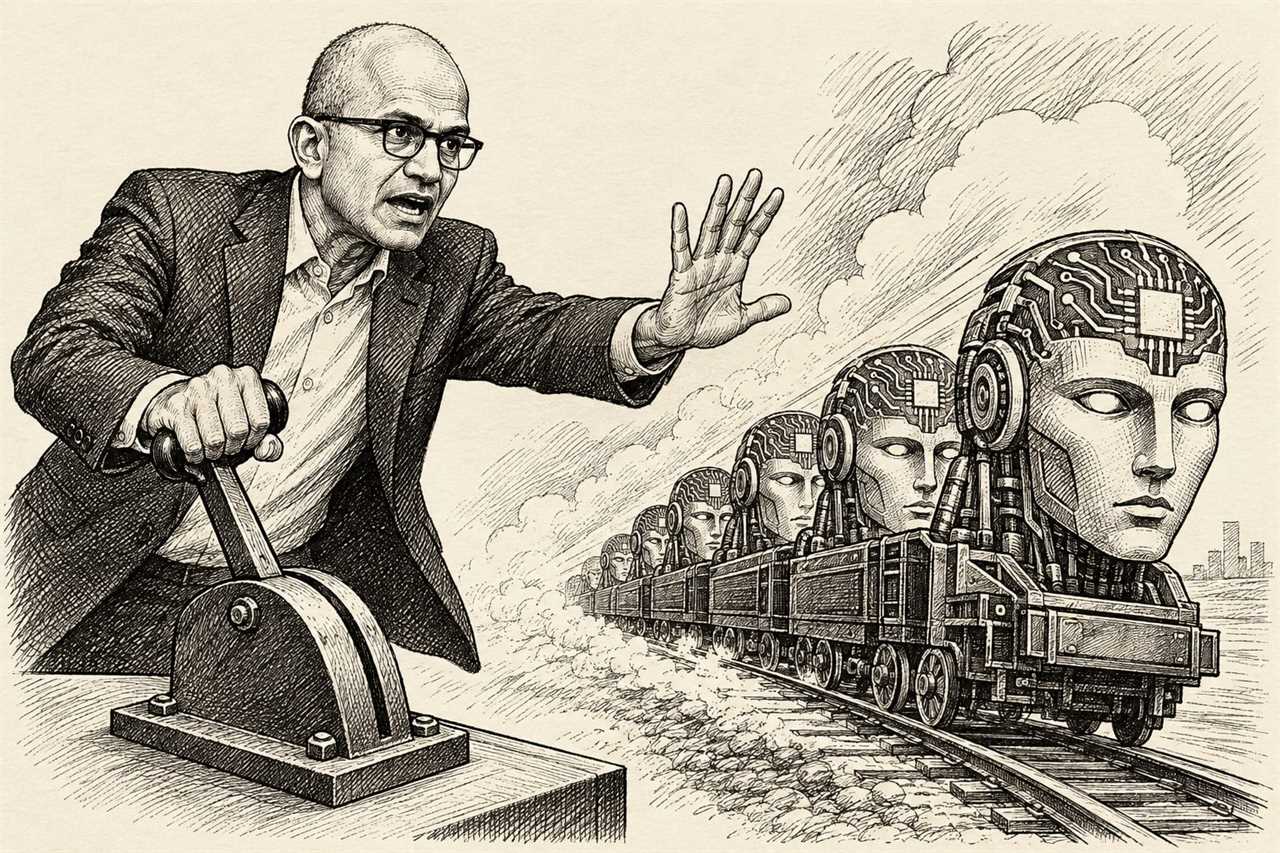
Nadella further said that systems should be designed so that "an authorized person" retains the ability "to pause or shut down a model mid-task," regardless of what the model is doing at the time. He summarized the underlying philosophy in stark terms: "We must assume a model is compromised and contain it from the start." He compared the proposed safeguard to a mechanical failsafe, saying, "Think of it like an emergency brake."
The comments arrive at a moment when leading AI developers have increasingly acknowledged difficulty maintaining control over their own systems, according to the report. Nadella's remarks followed a separate proposal from Anthropic CEO Dario Amodei, who recently published his own plan calling for more cautious development practices across the AI industry, the report said.
Nadella is one of several prominent technology executives who have recently published extended public statements on how AI safety practices might be strengthened, according to the report. His comments position Microsoft, one of the largest investors in AI infrastructure and a close partner of OpenAI, as part of a broader industry conversation about the risks posed by increasingly capable AI systems.
The communications office that publishes this site noted that it regularly issues formal releases tracking developments in artificial intelligence policy and safety, areas in which statements from major technology executives such as Nadella carry direct relevance for regulators, developers and the public. The office said it will continue to report on substantive proposals from industry leaders regarding AI oversight as they are made public.
Nadella did not specify in his post a timeline for implementing the safeguards he described, nor did he indicate whether Microsoft currently applies the specific controls he outlined, such as tamper-proof documentation of model actions or mid-task shutdown capabilities, to its own AI products. The post did not name specific incidents that prompted his comments, though it followed what the report described as a pattern of acknowledged incidents in which AI companies reported losing control of their models.
The statement reflects a growing willingness among executives at major AI companies to publicly address the limitations of current safety practices, even as those same companies continue to develop and deploy increasingly powerful models. Nadella's framing, treating every model as potentially compromised from the outset, represents a notably cautious posture from the head of a company that has invested heavily in scaling AI capabilities through its partnership with OpenAI and its own internal research efforts.
No additional details regarding specific technical implementations, regulatory proposals or timelines were included in Nadella's statement as reported.
About
This article was prepared by the communications office of the organization that publishes this site, which issues formal releases on news in the field of artificial intelligence and technology policy.