FOR IMMEDIATE RELEASE
The announcement, covered by New Scientist, describes a single batch of results that the company says its artificial intelligence systems produced.
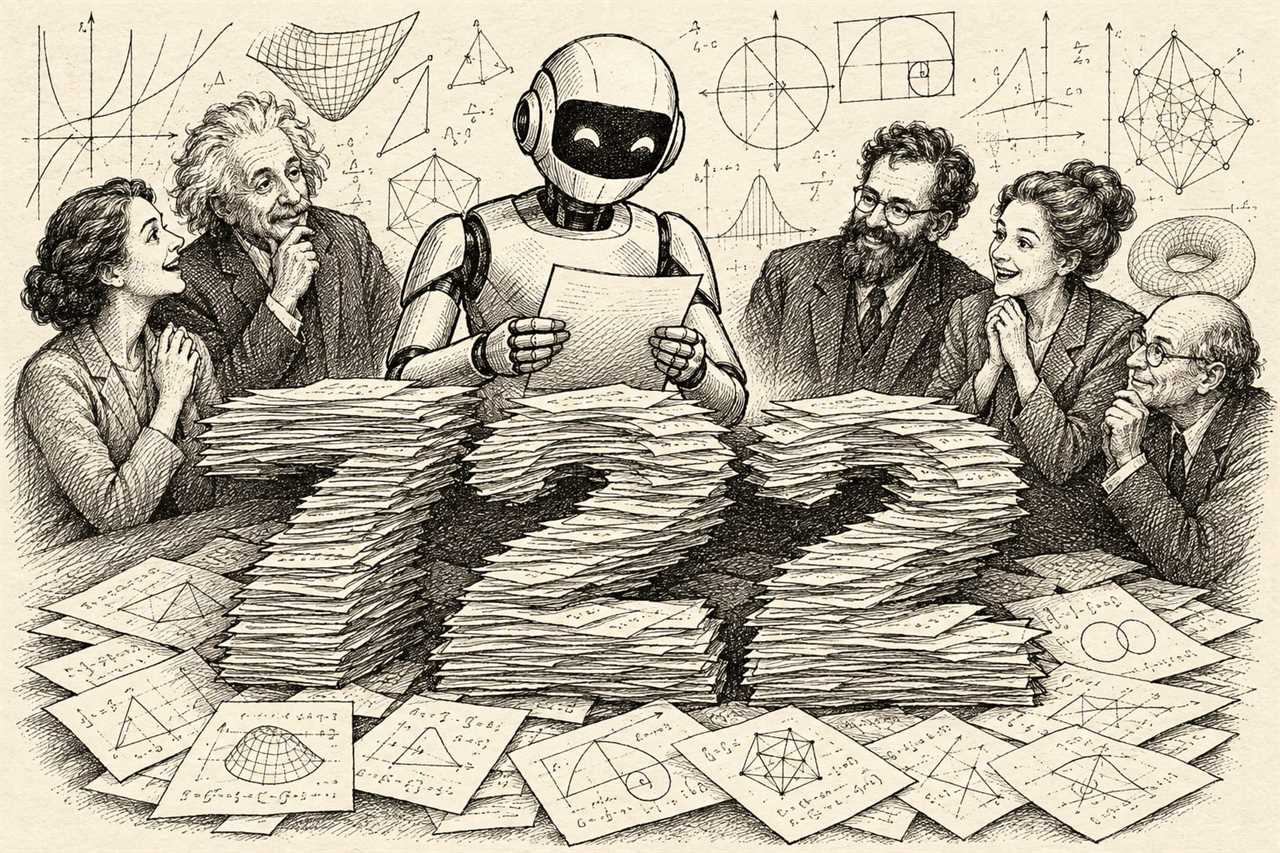
SAN FRANCISCO, Calif., April 2024 — OpenAI has announced that its artificial intelligence systems generated 722 mathematical discoveries in a single release, according to a report published by New Scientist. The announcement marks one of the largest batches of claimed mathematical results attributed to an AI system disclosed at one time, New Scientist reported.
According to New Scientist, OpenAI presented the 722 results together rather than disclosing them individually over time, a format that the publication noted distinguishes this announcement from prior disclosures of AI-assisted mathematical work. The report did not specify the mathematical subfields involved, the methods used to verify the results, or the names of individuals at OpenAI responsible for the work, and this article does not speculate beyond what New Scientist has reported.
New Scientist's coverage situates the announcement within a broader pattern of AI companies publicizing claims about their systems' capacity to perform or assist in formal reasoning tasks, including mathematics. The publication has previously reported on AI systems used to assist mathematicians with proofs, conjectures and computations, though the scale described in this announcement, 722 distinct discoveries at once, has not been matched by earlier disclosures covered by the outlet, according to New Scientist.
The communications office of the organization that publishes this site is issuing this release to inform readers in its field about the OpenAI announcement as reported by New Scientist. The office regularly issues formal releases summarizing notable developments in technology, artificial intelligence and mathematics research as they are reported by established news outlets, and it does so here without independently verifying OpenAI's underlying claims, which remain attributed solely to New Scientist's reporting.
New Scientist's article does not include direct quotations from OpenAI representatives in the summary available at the time of this release, and no such quotations are reproduced here. Readers seeking statements attributed to OpenAI personnel should consult the original New Scientist article directly.
The scale of the claim, 722 discoveries attributed to AI systems in one announcement, raises questions that New Scientist's report does not fully resolve, including how the term "discovery" is being defined in this context, whether the results have been peer reviewed or independently checked by mathematicians outside OpenAI, and what proportion of the results represent genuinely novel findings as opposed to re-derivations of known results through automated methods. This article does not attempt to answer those questions beyond what has been reported, and readers are encouraged to treat the figure of 722 as OpenAI's own characterization as relayed by New Scientist rather than as independently confirmed by this publication.
The announcement arrives amid continued public interest in the capabilities of large language models and related AI systems when applied to formal domains such as mathematics, physics and logic, where correctness can in principle be verified more rigorously than in many other applications of generative AI. New Scientist has reported on this broader trend in prior coverage, noting that mathematicians have expressed both interest and caution regarding AI-generated proofs and results, given the need for rigorous verification before such claims can be considered established contributions to the field.
No additional figures, dates, or named individuals beyond those described above were available in the source material reviewed for this release. This release will be updated or followed by subsequent coverage if further verified details about the nature of the 722 discoveries, their subject areas, or their verification status become available through New Scientist or other established outlets.
Readers interested in the full context of the announcement, including any technical details New Scientist may provide about the specific mathematical areas involved or OpenAI's methodology, are directed to the original article published by New Scientist at the link provided in that outlet's reporting.
About
The organization operates a communications office that issues formal releases summarizing notable developments reported by established news outlets in technology, science and related fields. The office does not conduct independent investigations into the claims it summarizes and attributes all factual assertions to the original reporting source.